


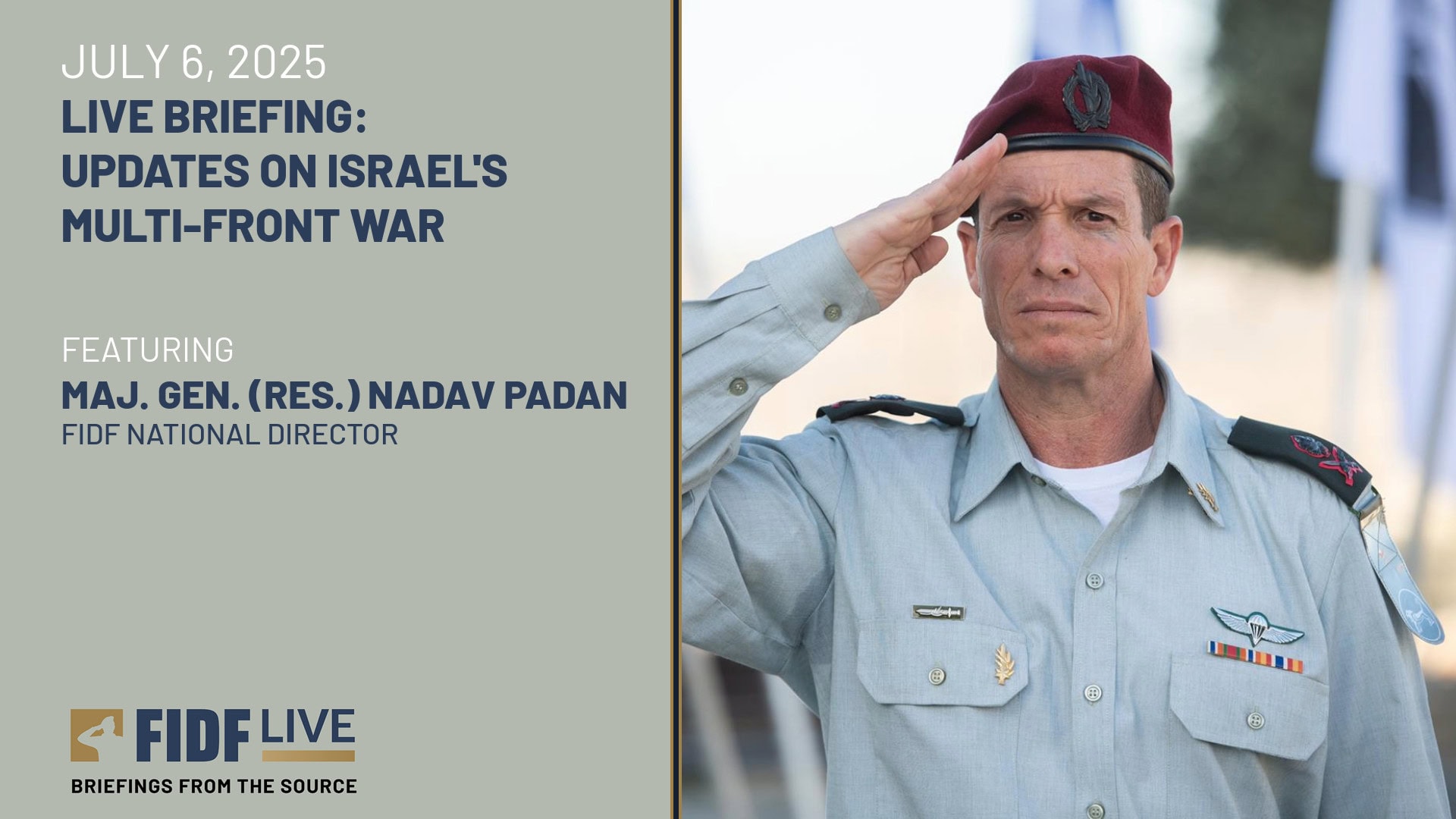
In a recent FIDF Live Briefing, Major General (Res.) Nadav Padan offered a comprehensive analysis of the complex and rapidly evolving dynamics across the Middle East. From the internal pressures on the Iranian regime to the fragile stability in Syria and Lebanon and the ongoing, intense efforts in Gaza, his assessment reveals a region at a critical turning point, marked by both cautious optimism and significant challenges.
Iran: A Regime Focused on Survival
According to Major General Padan, the primary goal of the Iranian regime has shifted to ensuring its own survival. Following recent military operations, Iran is in a process of “damage assessment,” but its main focus is on stabilizing an economy crippled by sanctions. This has created a new dynamic at the negotiating table with Western powers.
Israel’s Three-Pronged Goal
From an Israeli perspective, any agreement must address three critical areas:
- The Nuclear Program: Halting or significantly postponing Iran’s nuclear ambitions.
- The Ballistic Missile Program: Dismantling the infrastructure that allows Iran to threaten Israel and the wider Middle East.
- The Proxy Network: Ending Iran’s support for terrorist proxies throughout the region.
While there is optimism about achieving an agreement, Israel continues to push for all three components to be included in the negotiations.
Cautious Optimism in Syria and Lebanon
Syria’s Move Toward Stability
Syria is currently navigating a severe humanitarian and economic crisis, with 16 million people in need of aid. Amidst this struggle, there are positive signs of stabilization, supported by the U.S., Qatar, Saudi Arabia, and Britain. The leader Ahmed al-Shara (formerly known as al-Jolani) has even signaled a willingness to sign an agreement with Israel, similar to the Abraham Accords. However, Major General Padan cautions that this move is driven by “realpolitik” and economic necessity, while the underlying radical ideology remains a concern.
Hezbollah Under Unprecedented Pressure
In Lebanon, Hezbollah is in its most vulnerable position in over 25 years. A combination of factors has weakened the terrorist organization:
- Loss of Leadership: The absence of a charismatic leader like Nasrallah has diminished motivation.
- Financial Collapse: The flow of money from Iran has been cut, and Israeli operations targeted their financial institutions, leaving them unable to pay salaries.
- International Pressure and Incentives: Military pressure from Israel, combined with economic offers from the U.S. and Europe to the Lebanese government, has empowered Lebanon to push for Hezbollah to disarm.
While the Lebanese government is slowly gaining control, the situation remains extremely fragile and could revert to civil war if not handled carefully.
Gaza: A Complex Fight for Hostages and Security
The IDF’s primary focus has shifted to Gaza, with five divisions operating under immense military pressure. Major General Padan clarifies that the war to destroy Hamas as a military power was achieved months ago; the current fight is against persistent guerrilla and terror attacks from the remnants of these groups.
The operation is significantly limited by the presence of the remaining 50 hostages, approximately 20 of whom are believed to be alive. A phased ceasefire and hostage release deal is on the table, which would see 10 living hostages and 18 bodies returned in exchange for a 60-day pause in fighting. While this would be a dramatic humanitarian achievement, Padan warns that from a strategic perspective, it could allow Hamas to regroup without resolving the larger hostage crisis. The ultimate goal remains the return of all hostages and ensuring Hamas is no longer in control of the Gaza Strip.
A Call to Support: The FIDF Legacy Program
As Israel’s soldiers stand on the front lines, their families bear an immense burden. The FIDF Legacy program, established at the request of the IDF and Israel’s Ministry of Defense, provides critical support for the children and siblings of fallen soldiers. Hundreds of these young men and women are brought to the U.S. for summer camp experiences, giving them a chance to heal, breathe, and connect with others who understand their loss.
As Major General Padan stated, this program offers “an amazing opportunity for an orphan to find a supporting group” and gives them “hope for the rest of their life and ability and tools to deal with their future.”
The situation across the Middle East remains fraught with challenges, yet there are clear movements toward a more secure future for Israel and the region. The courage of the IDF soldiers makes this progress possible. Now, it is our turn to support them and their families. We invite you to reflect on their sacrifice and consider supporting the children left behind to participate in FIDF’s Legacy program.

Let Us Know What You Think